When a patient’s family longs for hope, they often seek out that hope from me. They have been told one thing from the medical team and now crave a different diagnosis from a higher power (meaning God, not me).
What I often tell them is that, in the end, when the medical team says there is nothing more that can be done, what I tell them is that it is now ultimately up to God and the patient. The human spirit impacts the outcome. Their loved one has to want to keep fighting. Still, the human will is not always enough. We cannot even begin to fathom the mind of God, and to ask why can be futile.
One way I can offer hope is by giving them a verbal snapshot of things I have seen. I have seen people no one expected to live walk out of the hospital on their own two feet. I have seen people everyone expected to survive die in an instant. And I have seen everything in between.
I try to help families come to terms with the fact that there is no definitive spiritual response that I can offer. All I can do is help alleviate some of their guilt and burden by placing the ultimate life-versus-death decision in the hands of God and their loved one. This often does give them some semblance of hope.
What families seldom realize is that we – that patient’s medical and spiritual care team – also grieve their loved one’s loss. It can hurt – badly. We become very attached to our long-term patients and become invested in their lives and deaths.
After returning from my two days off, one of my long-term patients was no longer in his usual room. I assumed he had been downgraded or discharged home.
We spoke almost every day for several months. I followed his journey and celebrated his wins. I even promised to visit him and pray for him post-op, knowing he would be sedated for at least 24 hours, but also knowing how much he valued prayer. Staff would even stop me to update me on his post-op progress and remind me that I better get in there and pray.
He had a slight hiccup a few days after post-op, but quickly recovered. I visited him on a Thursday as usual to pray with him, remind him that I would be off for two days, and promised to check in on him when I returned on Sunday.
He looked fantastic. He was working out with physical therapy twice a day, eating well, talking well, and optimistic about the future. I rejoiced with him and expected a full recovery – and hoped he could continue recovering at home by Christmas.
When I returned on Sunday and did not see his name on my patient list, I searched for him on our database, expecting to discover that he had been downgraded. Even though he was no longer on my unit, I still wanted to check in on him.
Instead of learning that he had downgraded or discharged, there was an x by his name, indicating that he had died. My heart sank. He should have been one of the survivors. I was thankful that I looked him up after visiting the other patients I needed to visit because I spent the rest of the night in mourning.
Losing a patient is always sad but losing one you have bonded with and fully expected to survive hits hard. Losing one you fully expected to survive so close to the holidays makes it worse. Knowing that kind of grief personally intensifies my grief for his family – their first holiday without the one they love.
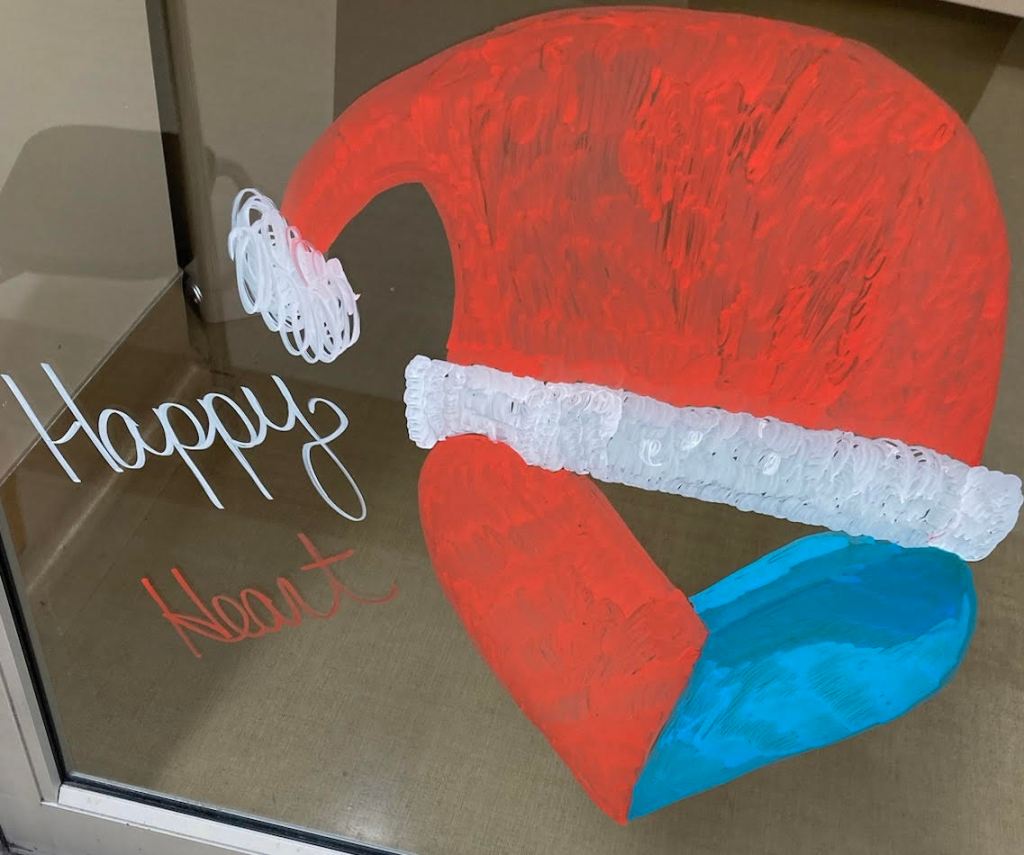
Before his death, I had been thinking a lot about meditation. After his death, I have been thinking about it even more.
As I alluded to in my previous post, I am re-trying some forms of therapy that did not work for me before but now seem beneficial. Meditation is one such technique. I used to think meditation was a bunch of hippie-voodoo-nonsense. I have since learned though, that meditation can be done in many forms and that I can take what I know about meditation (which is not much) and make it work for me.
The popular concept of meditation is to sit still and quietly focus on clearing the mind. When “intrusive” thoughts arise, we are encouraged to acknowledge the thoughts and then let them go again.
This doesn’t work for me. When my mind races, it is usually because I have stuff I need to work out, things that are causing my anxiety. Until I make sense of it, those thoughts will only grow in intensity. So, for me, successful meditation means giving free reign to my thoughts.
In recent practice, I have come to see meditation in its different forms as a type of prayer, much like journaling is an effective form of prayer for me. I am not sure if there is an official term for what I do, but the premise is simple:
Shut out the distracting background noise of the world and give free reign to the internal ramblings whirling aimlessly in my head. By doing so, a pattern or theme often develops. Sometimes, I feel God beside me, smiling like a proud papa when something finally clicks. Sometimes, He feels more like a therapist saying, “Okay, now that you understand the cause of this anxiety, we can get to work to deal with it.”
Simply put in Christian terms, meditation is a way to sit in the silence, allowing space for God to speak.
The morning after finding out about my patient’s death, I slept in rather than get up with the alarm to go work out before work. Oftentimes, emotional exhaustion is just as draining as physical exhaustion. I knew that I should not have skipped. I needed that physical release just as much as I need the emotional release.
Coming into work, my work as a chaplain encompassed much more than my ordinary load. Now, I had to sit with the others who were mourning the unexpected death of our patient. There was no time for me to process, to let my jumbled thoughts run wild until they made sense.
But I felt it . . . that desperate longing for the space and time to meditate. In the conclusion of Think Like a Monk, author Jay Shetty explains that meditation requires practice just like any other skill. The way to know if meditation is working is if it is missed when neglected.
I neglected it . . . and I missed it.
The thing about meditation – prayer – whatever you want to call it – whether seeking God or the universe – whatever the belief system, it comes down to being present, being mindful, fully alive and aware in the moment, fully in tune with the emotions of the here and now.
So, for me, when I think about my patient, how his unexpected death hit me, how it hit all us who cared for and treated him for months – when I think about the random boy band song that had been obnoxiously stuck in my head and driving me crazy for days – when I finally carved out a time for all those jumbled thoughts to have space to run free, when I followed those thoughts – and as my therapist taught me, followed the emotion behind the thoughts – when I allowed all of that in the same space and same time in the present moment, it became abundantly clear that all of it – ALL OF IT was pointing in one direction – the same direction – and that direction was Bailey.
The closer we get to Christmas, the more I miss her. This past Sunday, as I watched the live broadcast from my home church, Nashville First Church of the Nazarene, I took notice of the people I remember, those who were there when I was there, young people who were teenagers when I volunteered with the youth group who are now grown, people who weren’t there – people who have since passed away . . . and my thoughts as I watched focused on firsts – how we celebrate and sing these wonderful songs, celebrate these glorious times, all the while some people are secretly mourning.
I thought about how much I I love this season – how much I love the movies – the classics, the Santa Clause franchise, Hallmark Christmas movies. I love everything about this season – the secular and the religious celebrations. This is the one time of year I enjoy rom-coms and start to believe in romance. Add a Christmas theme and I’m sold.
Still, there is a missing piece, not as in p – e – a – c – e but as in p – i- e -c -e, the part of myself that is missing, this fresh hole that was whole last year, but that is not here this year – that Bailey sized emptiness.
So, when my patient died, and I thought about his family going through their first, it was empathy that got to me more than anything.
I wasn’t sad for him. I totally believe he’s in a better place. I totally believe he’s experiencing his first Christmas in heaven. I cannot even fathom how great that’s going to be. What I felt is sadness for his family because I feel it, too.
I miss Bailey. I miss her and I know a lot of people in this world don’t understand this kind of love and devotion for a dog but there are a lot of people who do get it. Either way, I don’t care because Bailey was my person. She is my person. She will always be my person. I couldn’t miss her any more if she stood on two legs instead of four.
On my way to work I usually sit in silence, or I listen to a podcast or audiobook but the morning I meditated, I felt the need to listen to the radio, specifically K-Love.
I heard about this song and assumed I knew what it would be about since I am somewhat familiar with what the artist recently went through, but I hadn’t actually heard the song . . . until now . . . after meditation helped me to make sense of my rambling thoughts. Toby Mac – Christmas Hits Different – and WOW!
It was a God moment. It was as I described earlier when these jumbled pieces come together and I feel like God is a proud papa smiling saying “see, here it is. Yep, yep you got it right. Yep. You made sense of it all. Okay, I’m here. You’re okay. I’m here. You’re not the only one.”
I wept as I listened to that song.
It was a moment that Christians refer to as the peace that surpasses understanding – to know that I can still laugh and smile and enjoy the things I love most about the holidays while still feeling sad, heartbroken. I can experience these polar-opposite emotions at the same time and it’s okay. I feel at peace – p-e-a-c-e – peace that surpasses understanding – that which comes from meditation – a silent prayer.
 TRA.Perspective
Leave a comment